FOUNDER STORY
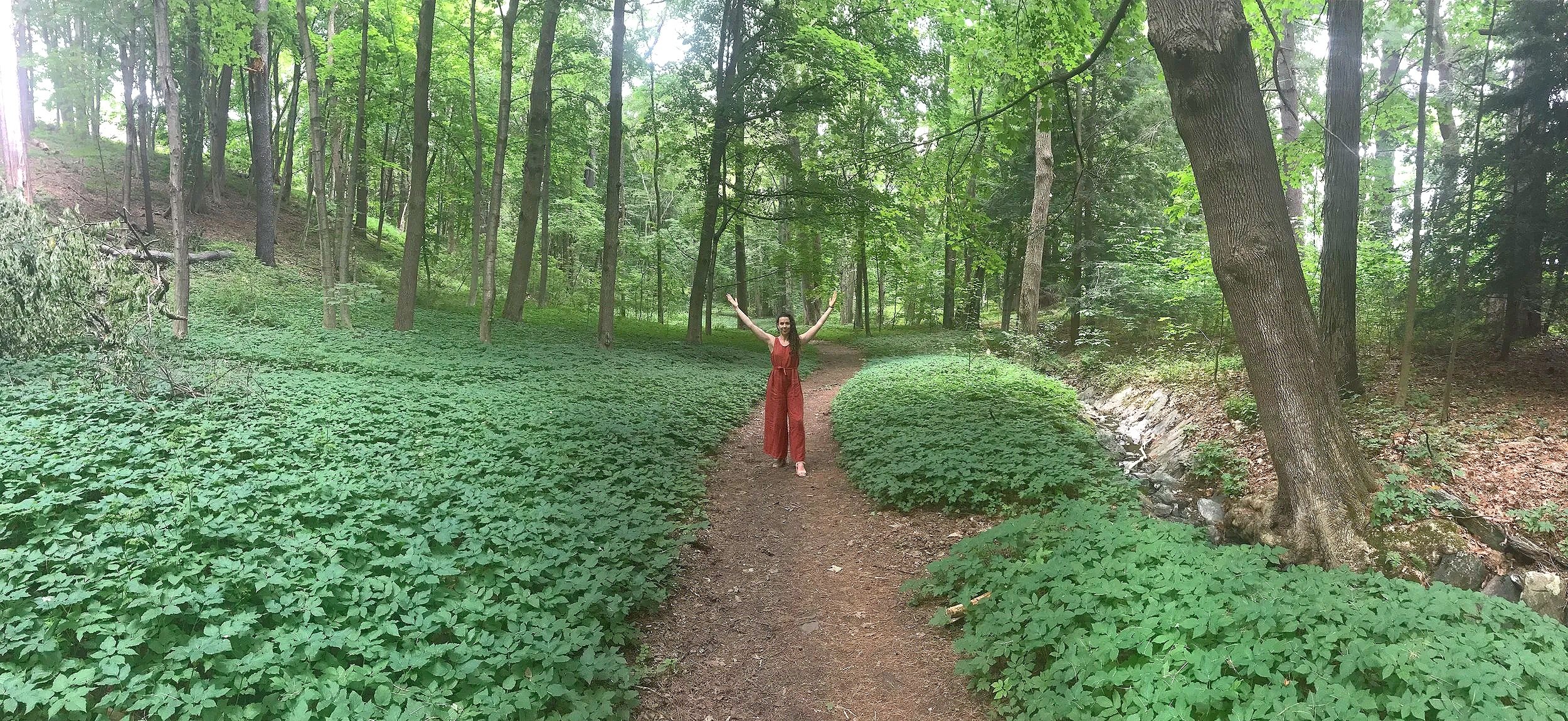
by Meghan Stetson
For most of my twenties, I was sleeping over 15 hours a night … and napping during the days.
At the time, I had a nice university office with a door I could close, and I would stretch out on the floor and do yoga nidra with a "busy" sign on the door - always a little bit vigilant because the door was one of those tinted-window-doors so I always worried if it looked like there was just a dead body on the floor. But nope; it was just me napping at 25 midday.
I told no one that I was moving through my days like this. I assumed, the way so many high-functioning women assume, that this was just what adulthood and hard work felt like; that everyone was tired, that everyone had a lot of responsibilities, and the difference between us was that I was failing to push through it as gracefully as they were.
This was my life at 25; 28; 30. I frequented my doctor’s office with a moving target of complaints: chronic eczema that wouldn't quit and was quite painful, sinus infections over and over again, utterly broken digestion, an exhaustion that no amount of sleep could touch, and so much more. I was at a well-regarded medical practice, with attentive providers. None of them thought to run the right blood tests. None of them ever did. After years of this, I did finally get a referral to a nutritionist, because “maybe it’s food allergies.”
It was a functional nutritionist who finally drew the labs that diagnosed me. I was 31. I would later learn that by that point, my immune system had been hyperactive for so many years that my thyroid was 90% destroyed.
You might think receiving this diagnosis was upsetting or maybe even devastating. It was not. For me and for SO many women with similar stories, finally getting a diagnosis brought tears to my eyes not from sadness but from relief. From finally feeling heard; finally feeling like I mattered; finally feeling like life does not have to and should not in fact be this hard. Other people aren’t “more graceful at pushing through” - they are just not all chronically inflamed and dealing with an autoimmune disease. Although now I realize how many of us are and just do not know it.
You might also think this arduous journey to a Hashimoto’s diagnosis is rare. It is not. For so many women it can take up to ten years to get diagnosed. It’s a systemic problem and it profoundly reflects how the world has long treated women’s voices. I am a woman with more resources than most, and I am acutely aware of the fortune I have had along my path. And it was anything but smooth, easy or straightforward.
Many women with Hashimoto's know this kaleidoscope of experience. The relief of a diagnosis. The grief of how much was lost in the time it took to find one. The rage at being dismissed over and over again. The confusion over how our medical system can miss something that is actually so common.
Those of us who receive a diagnosis are lucky. We are lucky to live in this time where women’s health is finally being researched. When women’s health issues are just starting to be addressed. We have a shot at being something other than hysterical, though we have so far to go.
We have faced people in positions of authority over and over again telling us that what we feel and notice in our bodies is wrong, overblown, and doesn’t matter. And we have learned to listen to ourselves along the way - to at least some degree - because at times no one else did.
What kept me close to that quiet voice inside of myself across the near decade of being dismissed by the medical system was my yoga practice. I had started practicing in my early 20s, drawn to it for reasons I couldn't have articulated then. I now know I was desperately seeking a life raft. Yoga, with its devotion to the breath, would leave me feeling momentarily alive in a way nothing else did. It was a place where I was encouraged to tune into myself and listen to myself as the true expert of my life.
I can see now that some wise part of me was reaching for a way back into a body I had spent most of my life pushing too hard and then in the early days of illness, trying to escape and suppress. Yoga gave me something nothing else could: the ability to be an observer of my own experience and the directive to both listen to and trust myself. It gave me a slow building of somatic awareness and attention to my nervous system. My first yoga teacher would insist we be aware: “what are you practicing? You can be doing any posture, but how are you inhabiting it? What is your inner state as you move through your practice?”. Yoga was the place where I found a felt sense, beneath the noise, that something was wrong long before anyone could explain what. It was the place where I first witnessed myself and noticed how frequently I was living from fight or flight.
Yoga was a saving grace for me. And I didn’t know it yet, but it would also become a rock of a foundation that I would later call on in navigating a Hashimoto’s diagnosis and ultimately what allowed me to touch remission.
I had spent my whole life as a high-achieving, classic perfectionist: the kind of girl who had panic attacks studying in high school because anything less than a hundred felt unbearable (seriously.). I had worn that wiring like a virtue. It had taken me everywhere I had wanted to go and allowed me to achieve everything I wanted to achieve.
But somewhere in those years of being sick, I started to see its shadow. The very same drive that had built my life was also, quietly, keeping me stuck. The pushing. The over-functioning. The bracing against my own body. The refusal to slow down even when slowing down was exactly what was being asked of me.
Hashimoto's, eventually, asked me to look directly at all of me.
It took me three or four more years after diagnosis to find a doctor who could really help me. Another few years of trying things, undoing things, learning, course-correcting. I did functional medicine. I worked with therapists, mentors, healers, teachers. I read everything. I changed how I ate, how I slept, how I worked.
The deepest changes weren't on paper. They were the ones I made inside myself.
Not long after my diagnosis, I left the career I had built and trained as a therapist: a decision that, at the time, felt less like a career change and more like a soul-level course correction. I had discovered that my deepest purpose is to be with others in their own journeys. Living with Hashimoto’s taught me that not much else matters to me and really, what else is there to do while we’re here than to be with one another?
Along my path to remission, I learned to deeply trust my body again: To take seriously the signals she had been sending me all along. I saw how I ignored them for years and how that fed into what became Hashimoto’s. I started to see how much of my exhaustion was the residue of a nervous system that I had never allowed to come out of survival. I began the slow, sometimes painful work of unhooking from conditioning that had been handed to me, and is handed to so many women, that said worth had to be earned, that rest had to be deserved, that pushing was the only way through, and that we of course should “do it all”.
I am forty now. I have been in reclaimed health for a few years, but it is still new to me, and I am aware of how very truly precious and delicate it is. So when I say I feel grateful every day, I mean it the way someone who has not always been able to access it does. When I wake up in the morning and a full breath feels easy to take in, gratitude registers in my heart and in my bones.
Hashimoto’s has taken a lot from me. I don't spend a lot of time cataloguing those things, but I of course have grief at times and I will not pretend otherwise. There are years I will not get back.
What I have gotten, though, is something I would not trade.
A pace and quality of life that is unrecognizable from the one I used to keep. A deeper connection to myself, to life force itself, and to the true preciousness of life. A relationship with my body that is no longer adversarial. A relationship with myself that is, finally, mine.
I am living, now, from the truest place inside of me. That, more than any lab marker or symptom shift, is the gift of Hashimoto’s for me. I was forced to strip away what was not mine and what was not me.
Thyroid Therapies is what I wish had existed for me fifteen years ago.
The thing nobody handed me that I pieced together over about 15 years, from yoga and therapists and functional medicine and modalities and trial and error and a deep, eventually unmistakable inner knowing.
Thyroid Therapies is not a protocol. It is not a replacement for medical care. It is the inner piece of the puzzle, the relational, nervous-system, soul-level pieces, that I believe makes every other piece of healing work better.
If you are here, I imagine some part of you already knows what I'm describing. The part of you tired of fighting your body. The part that suspects there is more to this than another protocol. The part that wants to find, in your own dark night, the pearl of wisdom that is, I believe, available to all of us if we are willing to stay close to it.
I'm so glad you're here.
— Meghan